xCoAx 2027
15th Conference on Computation, Communication, Aesthetics & X
7–9 July Évora, Portugal

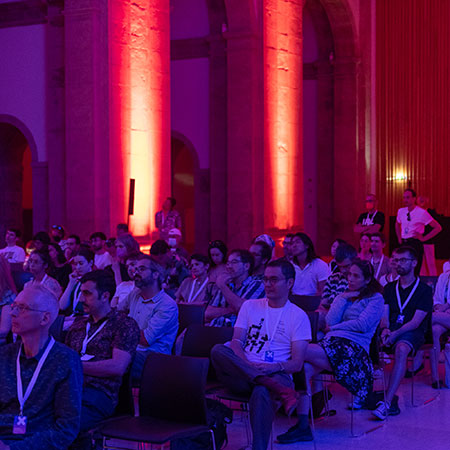
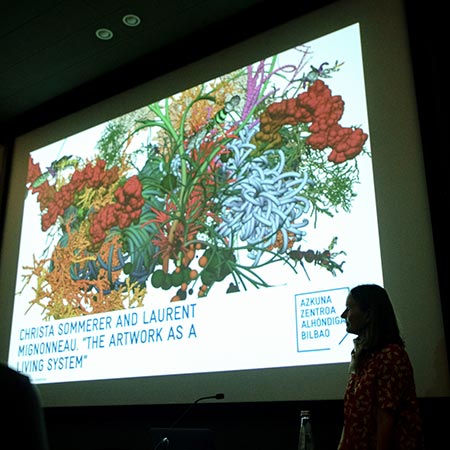
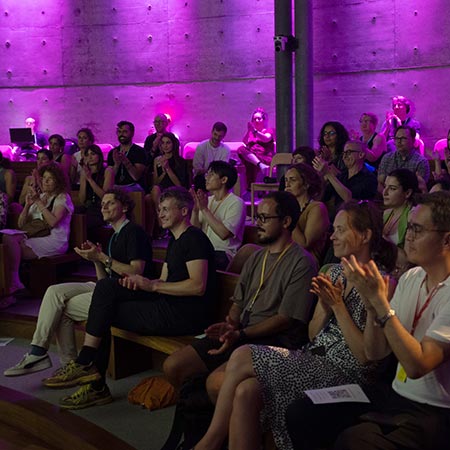
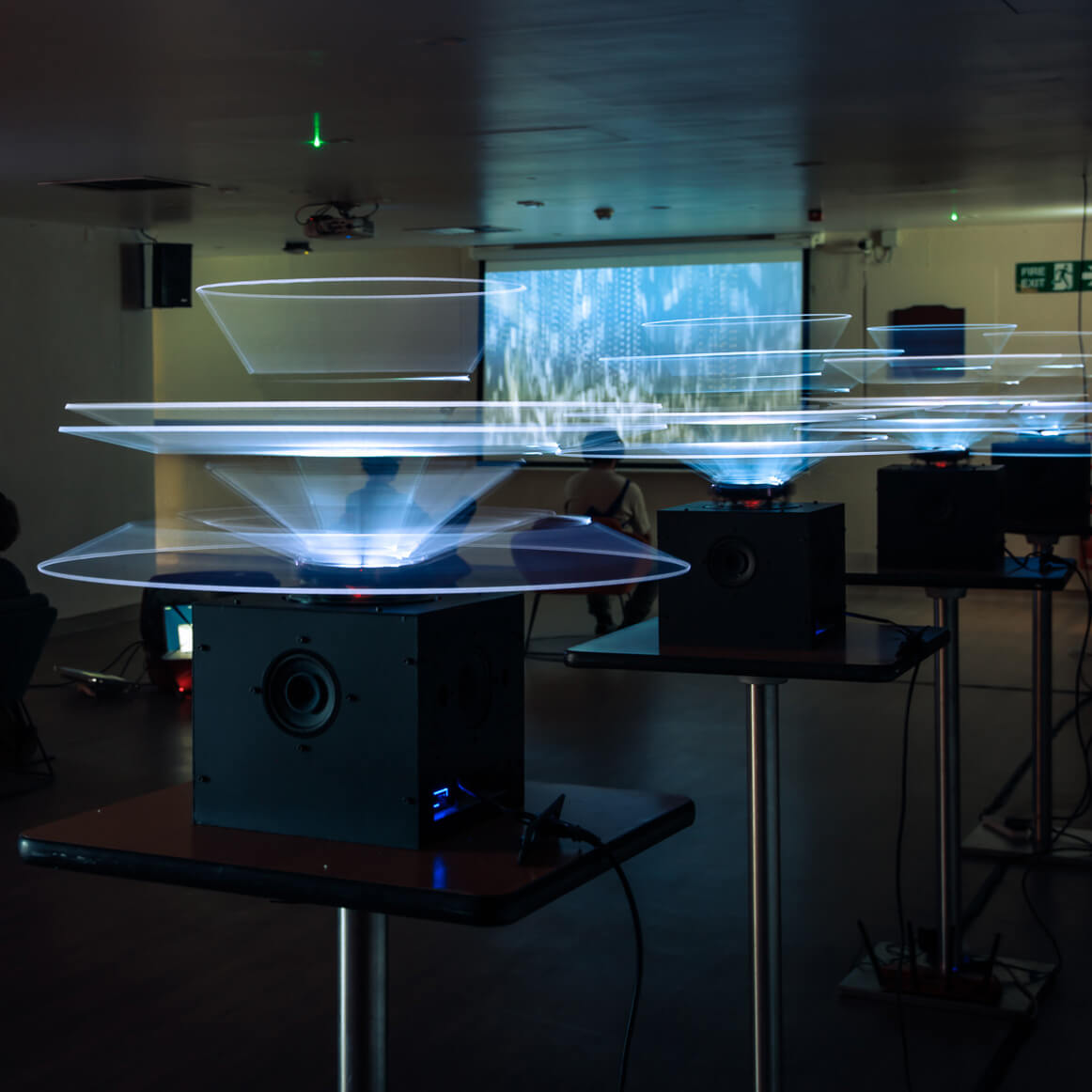
xCoAx explores the intersections where computational tools and media meet art and culture in the form of multi-disciplinary enquiries on aesthetics, computation, communication and the elusive X factor that connects and affects them all.

xCoAx focuses on the unpredictable overlaps between creative freedom and algorithmic rules, between human nature and machine technology, aimed towards new directions in aesthetics.

xCoAx is a great chance for international audiences to exchange ideas in search of interdisciplinary synergies between artists, media practitioners, computer scientists, and theoreticians at the thresholds between digital arts and culture.

Starting in 2013, xCoAx has taken place in Bergamo, Coimbra, Dundee, Glasgow, Graz, Lisbon, Madrid, Milan, Porto, Torino, Treviso, and Weimar. xCoAx 2027 will take place in Évora, Portugal, under the auspices of the Department of Visual Arts and Design of the University of Évora.
Call for papers, artworks, performances

xCoAx 2027 calls for papers, artworks, performances and research works-in-progress by scholars, artists, performers and students working on any of its multi-disciplinary facets.

You are invited to submit theoretical, practical or experimental research work in the form of papers, artworks, or performances on a range of topics that includes but is not limited to the following:

Computation / Communication / Aesthetics / X / Algorithms / Systems / Models / Artificial Aesthetics / Artificial Intelligence & Creativity / Artistic Explorations of Digital Game Technologies / Audiovisuals / Multimodality / Design / Interaction / Generative Art & Design / History / Mechatronics / Physical Computing / Music / Sound Art / Performance / Philosophy of Art & of Computation / Computational Photography and Image Technologies / Technology / Ethics / Epistemology

Papers

Submit a paper (3,000 to 6,000 words, excluding references) following the formatting in the Word template for papers <insert link>. Review of papers will be double-blind. Please ensure the PDF file is completely anonymised (i.e., it omits author-related information in the body of text, and explicit self-citations in notes and bibliography). Accepted papers will be published in the conference proceedings, and authors will hold a 15-minute presentation at xCoAx 2027.

Artworks

Proposals should provide a clear description of the work in the form of a document, including the following:

  • – A 200-word abstract;
  • – A 700 to 2.000-word main text (excluding references);
  • – At least one featured image of the artwork (1920 width × 1080 height);
  • – Links to online documentation or preview of the work;
  • – An appendix with a technical rider and setup details for online or on-site settings (including what the author provides and what they would like xCoAx to provide).

The artwork document must follow the formatting in the Word template for artworks and performances <insert link>.

Review of proposals will be single-blind. On notification day, “conditional” acceptances will be notified to the artists whose work obtains positive enough reviews from the Scientific Committee. This means that the acceptance is still pending and the logistic details will have to be worked out between the artists and the curators of xCoAx 2027. If an agreement is reached, then the work is fully accepted and will be part of the exhibition and featured on the xCoAx 2027 website, and the artists will hold a 5-minute presentation at xCoAx 2027. The proceedings will publish the abstract, the main text, and at least one featured image of the artwork provided by the authors.

Performances

Proposals should provide a clear description of the work in the form of a document, including the following:

  • – A 200-word abstract;
  • – A 700 to 2.000-word main text (excluding references);
  • – At least one featured image of the artwork (1920 width × 1080 height);
  • – Links to online documentation or preview of the work, namely audio or audiovisual documentation of the performance or documentation of previous works;
  • – An appendix with a technical rider and setup details of the performance, including performance duration and technical requirements (including what the author provides and what they would like xCoAx to provide).

The document must follow the formatting in the Word template for artworks and performances <insert link>.

Review of proposals will be single-blind. Accepted works will be part of the performance program and featured on the xCoAx 2027 website, and the authors will hold a 5-minute presentation at xCoAx 2027. The proceedings will publish the abstract, the main text, and at least one featured image of the performance provided by the authors.

Additional information and submission details

  • – All works must be submitted via Microsoft CMT, available at this link <INSERT LINK>.
  • – Submissions must be original and will be rigorously reviewed by an international and multidisciplinary scientific committee in a process that will assess originality, relevance, artistic and technical achievements;
  • – Submissions should be presented as .pdf files with all the media files embedded or linked to online resources;
  • – Accepted works will be required to be revised in accordance with the suggestions of the reviewers and submitted in .docx for publication, with all the images and other media files attached as independent files;
  • – All images and media assets must be cleared for publication by the authors;
  • – All submissions must include a statement about if and how generative AI was used in authoring the submissions;
  • – At least one of the authors of each selected contribution must register for the conference before the first author registration deadline for the work to be published in the proceedings;
  • – xCoAx’s working language is English;
  • – xCoAx’s conference proceedings (with ISBN) will be published online with free access;
  • – Please contact the program chairs at info@xcoax.org with any questions regarding submissions.

Important dates in 2027

  • – January 31 (end of day anywhere on Earth): Deadline for submissions.
  • – March 29: Notifications to authors.
  • – April 26: Registration deadline for authors.
  • – April 30: Delivery of final versions of full papers and extended abstracts of artworks and performances for the proceedings.
  • – May 2: Delivery of final versions of multimedia files for the website.
  • – July 5 and 6: xCoAx exhibition set-up at Évora.
  • – July 7 to 9: xCoAx conference, exhibition, and performances.

Conference Program

  • – July 7: Conference opening, School of X, exhibition opening, proceedings launch.
  • – July 8: Paper presentations, artwork presentations, keynote, performances.
  • – July 9: Paper presentations, performance presentations, keynote, closing event.

Registration

For each accepted submission, authors must register before April 26 2027.

Registration is required from anyone (authors and audience) who plans to attend xCoAx 2027.

For each accepted work, at least one author must register and present it at xCoAx 2027.

The fees below are for one author with one work accepted at xCoAx 2027 or for members of the general audience. In case one author has multiple works accepted, a specific registration fee will have to be agreed with the Organising Committee.

No refunds are possible in case of a no-show.

  • – Regular registration: EUR 400 (authors with academic affiliation)
  • – Reduced registration: EUR 200 (authors without academic affiliation, co-authors of authors already registered with a regular registration)
  • – General audience registration: EUR 80
  • – Generous supporter registration: EUR 500 (give extra support to xCoAx)

Co-authors of already registered authors and the general audience can register after April 26 2027, until the venue is at capacity.

Call for the School of X

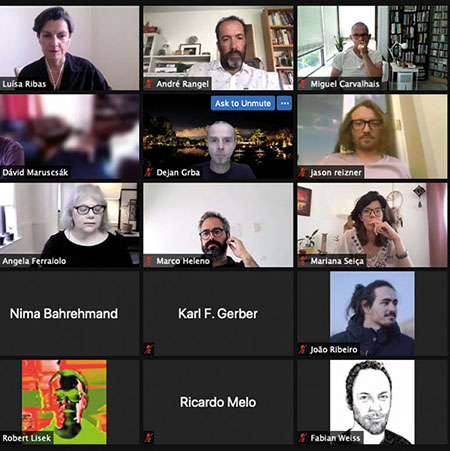
The School of X is a virtual and physical space where PhD candidates are invited to submit a text on their current research project and/or artistic endeavour for the chance to exchange ideas, discussing theory and practice, give and receive feedback, both with fellow participants and with the School of X mentors: André Rangel (Faculty of Fine Arts, University of Porto), Angela Ferraiolo (Sarah Lawrence College), Deniz Jones (Lancaster University), Kim Albrecht (Folkwang University of the Arts), Luísa Ribas (University of Lisbon), Mario Verdicchio (Università degli Studi di Bergamo), Martin Zeilinger (Abertay University), Miguel Carvalhais (University of Porto), Rodrigo Hernández Ramírez (University of Sydney), Rosemary Lee (University of Porto).

Schedule

Online sessions online, every two weeks, starting in April. Participation at xCoAx 2027 in Évora, July 7–9 2027.

Topics of interest

The pillar themes of xCoAx — Computation, Communication, Aesthetics, X — together with all the topics that are welcome at xCoAx, including but not limited to: Artificial Aesthetics, Artificial Intelligence & Creativity; Philosophy of Art, Philosophy of Computation; Ethics, Epistemology; Design, Visual Arts, Sound Art, Music, Performance; Interaction, Games; Generative Art.

We are particularly interested in proposals that aim to develop original work during the School of X experience. Summaries of already developed PhD chapters and/or already-published work will not be accepted. Participating in the School of X is a unique opportunity to develop some ideas with the support of an interdisciplinary cohort of mentors and peer students, do take advantage of that!

How to apply

Those interested in attending the School of X must submit their application through Microsoft CMT, following the xCoAx Word template for papers <insert link for paper template>. The submission should contain the following: 1) a short bio (100 words) and 2) a text which describes and discusses the project they want to develop through the School of X. Depending on the kind of project, the submitted text can vary. Its content, scope, and length should match the following requirements in accordance with the chosen type:

General paper: text describing and discussing a research topic of choice, which can be a theme from the applicant’s PhD thesis or another topic they are currently engaging with. Word count: 2,000-3,000 words, excluding references.

  • – Technical paper: text detailing the method, procedure, and technical details of one of the applicant’s works or a technical topic. The text should discuss the aims and techniques of the applicant’s work in adequate detail to be understood and discussed during the School of X sessions. Word count: 1,500-2,500 words, excluding references.
  • – Position paper: text engaging with a debated topic in which the applicant describes and defends their position. Word count: 1,500-2,000 words, excluding references.
  • – Artistic writing: text illustrating a current artistic work of the applicant. The text should discuss the aims and techniques of the applicant’s work in adequate detail to be understood and discussed during the School of X’s sessions. Word count: 2,000-3,000 words, excluding references.

The program

The School of X program includes online discussion-based sessions in which successful applicants present their project and discuss it with the School of X’s mentors and with participating peers. The goal is for participants to use this feedback to improve their skills as critical thinkers and creators, shaping each proposal towards its full potential under the mentorship of the mentors and the peer review of other participants. The final versions of the projects will be presented at xCoAx 2027 during an open session.

School of X important dates in 2027

  • – January 31 (end of day anywhere on Earth): Deadline for applications.
  • – March 29: Notification of acceptance.
  • – April 11: Deadline for registration.
  • – July 7: School of X presentations at xCoAx 2027.

Registration fee

Accepted applicants must register by April 11, 2027. The fee is EUR 200 and it includes participation in xCoAx 2027.

If funding is needed, prospective students of the School of X should begin the search well in advance of the program start date.

For any enquiries regarding the programme, please contact m.zeilinger@abertay.ac.uk.

Travel and accommodation

About Évora

Évora is a European Capital of Culture for 2027 and a designated UNESCO World Heritage Site.

“This museum-city, whose roots go back to Roman times, reached its golden age in the 15th century, when it became the residence of the Portuguese kings. Its unique quality stems from the whitewashed houses decorated with azulejos and wrought-iron balconies dating from the 16th to the 18th century. Its monuments had a profound influence on Portuguese architecture in Brazil.”

— UNESCO World Heritage Centre

xCoAx 2027 Venues

xCoAx 2027 will take place at three main venues, all located within the city walls and just a few minutes’ walk from one another.

  • – Conference and Exhibition Venue: The conference and exhibition will take place at the Social Innovation Centre (Centro de Inovação Social) of the Eugénio de Almeida Foundation (Fundação Eugénio de Almeida), located in the heart of Évora’s historic centre, right next to the Roman Temple, commonly known as Diana’s Temple (Templo de Diana).
  • – Performance Venue: The performance evening will take place at the Christopher Bochmann Auditorium at Mateus d'Aranda College (Colégio Mateus d'Aranda), which houses the Music Department of the University of Évora.
  • – Lunch Site: The two meals included with registration will be served at the Old Canteen (Cantina Velha), a historic dining hall located at the Holy Spirit College (Colégio do Espírito Santo), in the main campus of the University of Évora.
Getting to Évora

Évora is located approximately 135 km east of Lisbon, towards the Spanish border. The city is easily accessible from Lisbon by train, bus, or car.

  • – By Train: Travelling by train from Lisbon to Évora is a comfortable option, with direct journeys taking approximately 1 hour 40 minutes. Several direct trains operate daily. Fares vary depending on the ticket type and booking conditions. Train services are operated by CP – Comboios de Portugal cp.pt/en.
  • – By Bus: Buses offer frequent departures from Lisbon at lower fares, when booked in advance. The journey typically takes around 1 hour 30 minutes. Departures are available from several locations in Lisbon, including Humberto Delgado Airport. The main operators include Rede Expressos and FlixBus.
  • – By Car: Évora is easily accessible via the A2 and A6 highways connecting Lisbon to Évora. If you are travelling by car, we recommend parking at Rossio de São Brás, a public parking area approximately an 8-minute walk from the venues. Alternatively, paid parking facilities are available closer to the venues.

We encourage you to travel sustainably.

Accommodation

As Évora is a European Capital of Culture and July is peak tourism season, booking accommodation well in advance is highly recommended. Below are two recommended options within walking distance of the venues:

  • – Moov Hotel Évora
  • – Hotel Solar de Monfalim

Committees

Scientific Committee

Organising Committee

Local Support Team

  • Célia FigueiredoUniversity of Évora
  • Beatriz CorreiaUniversity of Évora
  • José GagoUniversity of Évora
  • Vítor JoaquimPolytechnic University of Portalegre
  • Hugo MarquesUniversity of Évora

Past Organisers

Get in Touch

  • – email: info@xcoax.org
  • – instagram: @xcoaxorg
  • – bsky: xcoax.org

The Microsoft CMT service was used for managing the peer-reviewing process for this conference. This service was provided for free by Microsoft and they bore all expenses, including costs for Azure cloud services as well as for software development and support.